The Role of AI in Cybersecurity: Can AI Replace Hackers?
The Role of AI in Cybersecurity: Can AI Replace Hackers?
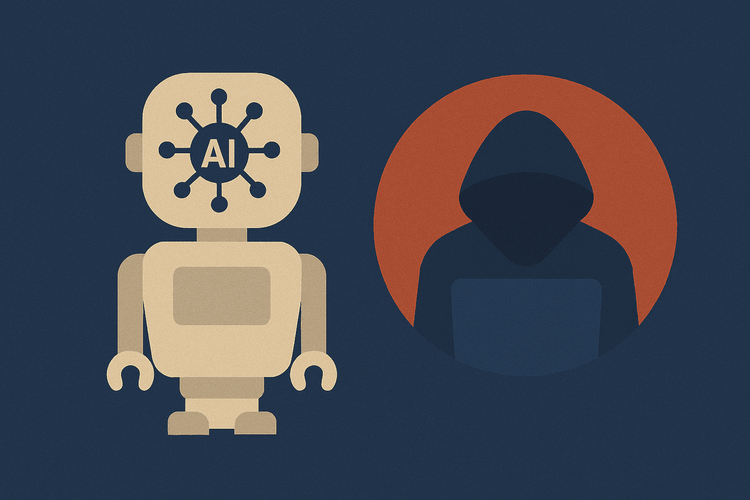
Artificial Intelligence (AI) is revolutionizing cybersecurity, providing automation, speed, and efficiency in detecting and preventing cyber threats. But can AI replace human penetration testers and ethical hackers entirely? While AI-powered solutions offer advantages, they also have limitations that prevent them from fully replacing human expertise.
Let's explore AI in cybersecurity, its role in AI-driven penetration testing, and why human hackers remain irreplaceable.
AI's Strengths in Cybersecurity
AI brings several benefits to cybersecurity, making it a powerful tool for security professionals.
1. Speed and Automation
-
AI can analyze large datasets in real-time, identifying threats faster than human analysts.
-
Automated security systems powered by machine learning in cybersecurity can detect anomalies instantly and respond to threats without manual intervention.
2. Enhanced Threat Detection
-
AI-driven security tools use advanced pattern recognition to detect known and emerging cyber threats.
-
AI can recognize suspicious activities, preventing malware, phishing, and ransomware attacks before they cause damage.
3. Continuous Monitoring and Risk Assessment
-
AI-powered security solutions continuously monitor networks and applications, identifying vulnerabilities before they are exploited.
-
AI-driven penetration testing tools simulate attacks and provide risk-based insights to enhance security defenses.
AI's Weaknesses: Why AI Can't Fully Replace Hackers
While AI excels in automation and analysis, it lacks certain qualities that make human hackers invaluable.
1. Lack of Creativity and Unconventional Thinking
-
AI relies on patterns and historical data, making it ineffective against novel attack techniques.
-
Ethical hackers use creativity and intuition to uncover security flaws that AI might overlook.
2. Inability to Adapt to Sophisticated Attacks
-
Cybercriminals constantly evolve their tactics, creating zero-day exploits and social engineering attacks that AI cannot predict.
-
Human hackers can think outside the box, adjusting strategies dynamically based on the target's weaknesses.
3. False Positives and Over-Reliance on Data
-
AI-based cybersecurity systems can produce false positives, flagging non-threatening activities as potential attacks.
-
AI requires continuous training and updates to remain effective, and even then, it can misinterpret new attack methods.
The Future: AI as an Enhancement, Not a Replacement
AI is a powerful tool that enhances cybersecurity, but it works best when combined with human expertise.
1. AI + Human Collaboration
-
AI handles repetitive tasks like log analysis, anomaly detection, and automated penetration testing.
-
Human hackers focus on advanced attack simulation, strategy development, and security analysis.
2. AI-Powered Tools for Ethical Hackers
-
Security teams use AI-driven penetration testing to identify vulnerabilities more efficiently.
-
AI automates threat detection, allowing ethical hackers to focus on complex attack vectors.
3. AI's Role in the Future of Cybersecurity
-
AI will continue evolving, making machine learning in cybersecurity more advanced.
-
However, ethical hackers and penetration testers will always be needed to handle complex security challenges.
Final Thoughts
AI is a game-changer in cybersecurity, offering speed, automation, and enhanced threat detection. However, it cannot replace human hackers, as creativity, strategic thinking, and adaptability remain crucial for effective security.
The future of cybersecurity lies in the collaboration between AI and human expertise, ensuring businesses stay ahead of evolving cyber threats.
Need Expert Cybersecurity Solutions?
At Cyberbay, we integrate AI-driven penetration testing with human expertise to provide cutting-edge security solutions. Contact us today to enhance your cybersecurity posture. Book a Demo to see how we can help!
Latest Insights
Keep up with key cybersecurity developments.